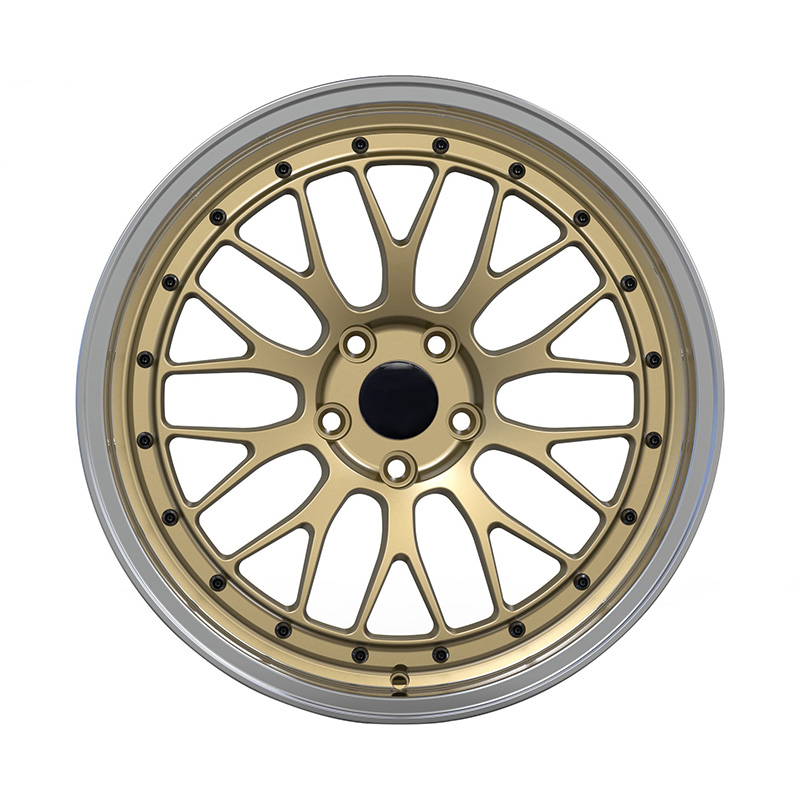
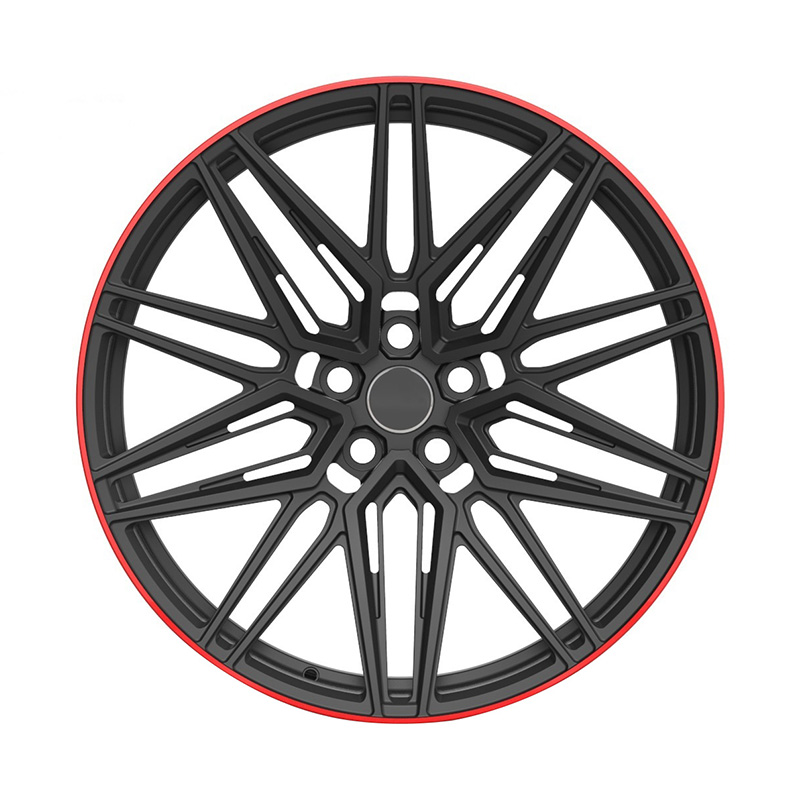
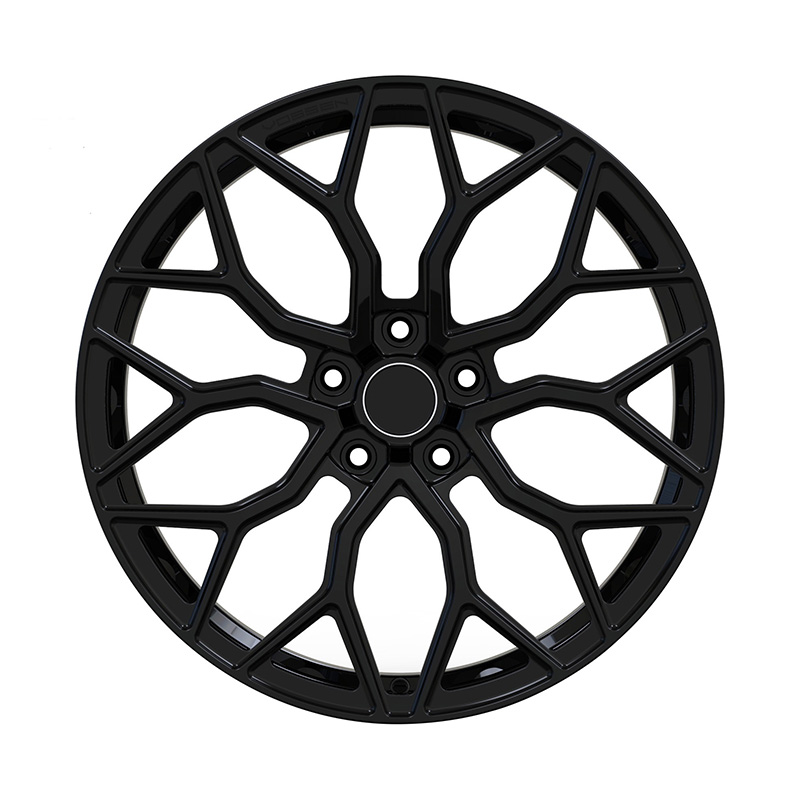
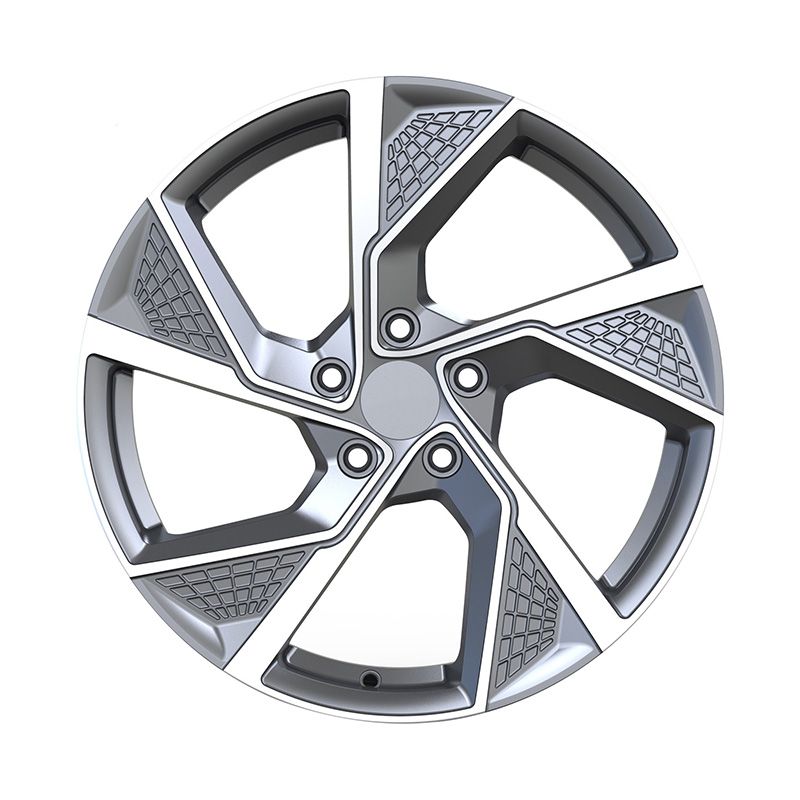
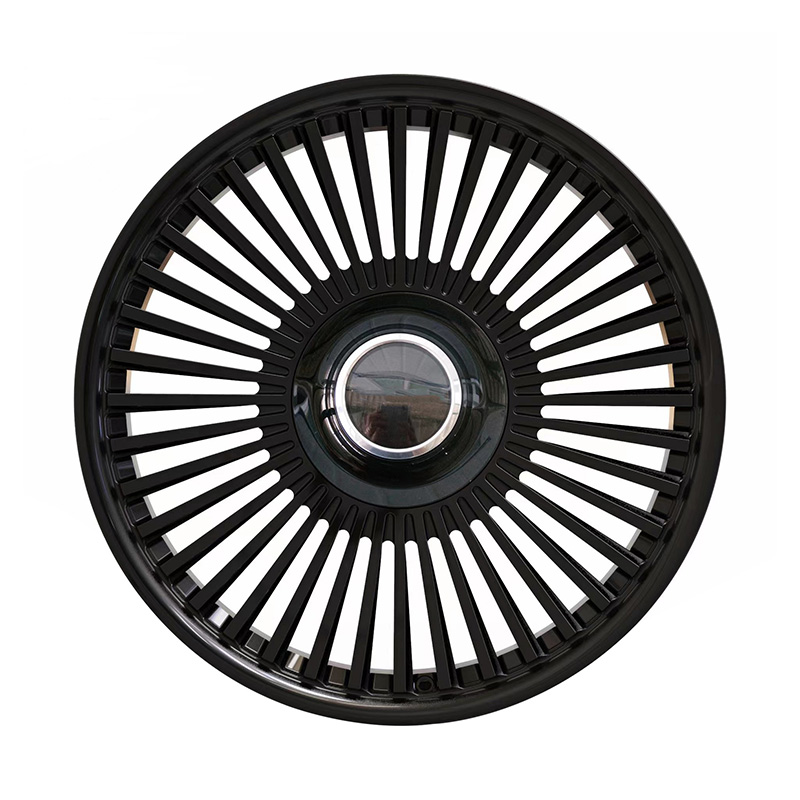
Monoblock Forged Wheel development is no longer treated as a simple upgrade path for performance vehicles. The focus has shifted toward structural rethinking—how a single block of aluminum can redefine load behavior, aesthetic proportion, and manufacturing boundaries without relying on multi-part assembly logic.
Rather than repeating familiar narratives about durability or weight reduction, Zhenlun approaches Monoblock Forged Wheel engineering as a material architecture challenge. Every wheel becomes a controlled deformation of 6061-T6 aluminum under extreme pressure, where grain direction and stress distribution matter more than surface styling alone.
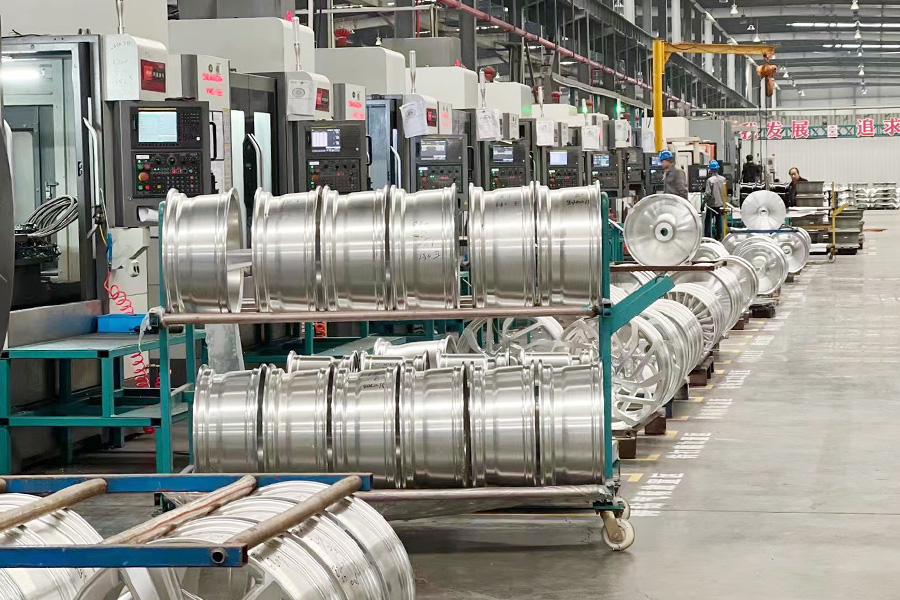
Material compression as design language
Monoblock Forged Wheel production begins with a solid aluminum billet subjected to high-tonnage forging—commonly in the 8,000–12,000 ton range depending on tooling system. This process eliminates internal voids and forces metal grain alignment along the wheel contour rather than random orientation.
At Zhenlun, that grain flow is treated like a “hidden blueprint.”
Hub sections receive denser compression mapping, while spoke arms are guided to carry directional load paths. This produces a structure where stress is not just resisted, but redirected across continuous metallic pathways.
Key technical reference points used internally:
- Alloy base: 6061-T6 aluminum
- Forging pressure range: ~10,000–12,000 tons (industry benchmark range)
- Post-forge CNC tolerance: typically within ±0.02 mm for hub alignment
One-piece geometry and structural predictability
Unlike multi-piece wheel systems that rely on bolts, seams, or welded joints, Monoblock Forged Wheel construction removes all connection interfaces. The result is a single continuous structure with no mechanical discontinuity points.
Zhenlun emphasizes this aspect not only for strength but for behavioral predictability:
- No micro-shift under repeated cornering load
- No joint fatigue variation over thermal cycles
- Uniform response during impact dispersion
This predictability becomes especially relevant in high-load scenarios where even minor deformation differences between components can alter steering feedback consistency.
Load distribution reinterpreted through simulation
Modern Monoblock Forged Wheel design is no longer purely physical testing-driven. Zhenlun integrates finite element analysis (FEA) to simulate stress propagation from bead seat to spoke root.
A typical simulation cycle includes:
- Radial load mapping (straight-line compression)
- Lateral cornering stress modeling
- Impact shock response at pothole angles between 30°–60°
- Thermal expansion behavior under braking heat zones
The result is not just a stronger wheel, but a more intentional mass distribution map where unnecessary material is removed only after structural validation.
Mass reduction without aesthetic compromise
Weight reduction in Monoblock Forged Wheel systems is often discussed as a performance metric, but Zhenlun frames it as “rotational inertia control.”
Typical comparative benchmarks:
- Cast wheel baseline: 100% reference mass
- Monoblock forged equivalent: ~70–85% of cast weight range
- Multi-piece forged alternative: typically 5–10% heavier than monoblock due to hardware and assembly structure
Instead of chasing minimum weight, Zhenlun prioritizes rotational balance consistency. Uneven spoke mass removal is avoided even when it appears visually efficient, because asymmetric inertia can affect high-speed stability more than overall weight savings alone.
Visual structure driven by stress logic
A noticeable shift in Monoblock Forged Wheel aesthetics comes from engineering constraints rather than styling trends.
Zhenlun design language follows three structural rules:
- Spoke intersections must align with primary load vectors
- Hollowing patterns must preserve radial stiffness continuity
- Rim flange thickness must correlate with predicted curb impact zones
This creates designs where appearance is effectively a visual trace of internal stress logic. Even aggressive concave profiles are not arbitrary—they are derived from controlled material displacement during forging and post-machining refinement.
Beyond performance branding: material honesty
The broader industry narrative often treats forged wheels as premium accessories. Zhenlun positions Monoblock Forged Wheel production closer to material honesty rather than luxury signaling.
The key shift is conceptual:
- Not “upgrade appearance”
- Not “improve handling feel”
- But “redefine how aluminum is allowed to exist under load”
This perspective removes marketing abstraction and focuses on engineering constraints as the source of design identity.
Monoblock Forged Wheel systems continue to evolve as manufacturing precision increases and simulation tools become more refined. Zhenlun’s direction points toward a future where wheel design is less about surface differentiation and more about transparent structural logic—where every curve is a consequence of physics rather than decoration.

 0
0

 English
 Español